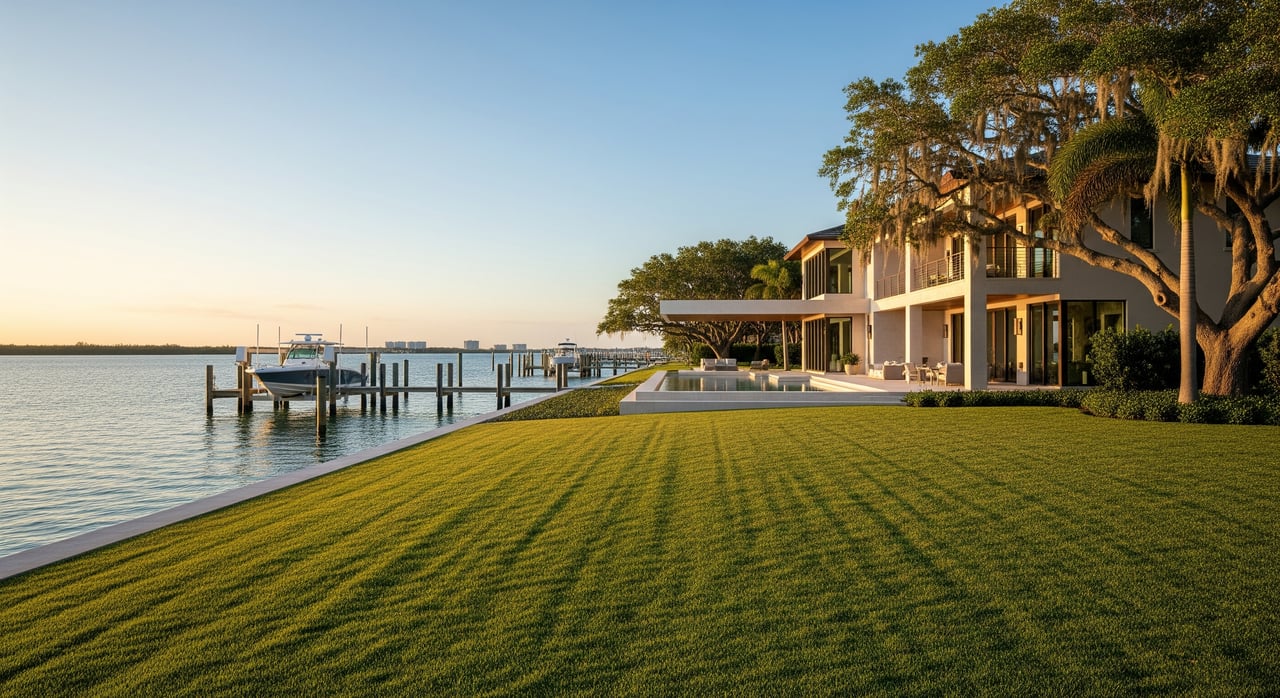
Are you getting ready to list your waterfront home in Osprey and wondering what price will attract serious buyers without leaving money on the table? You’re not alone. Waterfront pricing here is different because every shoreline, view, dock, and bridge creates a unique value story. In this guide, you’ll learn the exact framework we use to price Osprey waterfront homes with confidence, using data, permits, and real boating access—not guesses. Let’s dive in.
Osprey waterfront, at a glance
Osprey sits on Florida’s Gulf Coast between Sarasota and Venice with several distinct waterfront types: bayfront along Little Sarasota Bay and Roberts Bay, intracoastal channels and tidal canals, dredged or lagoon-style canals, and a smaller set of Gulf-front properties. Each waterbody attracts a different buyer pool, which means different pricing dynamics.
Inventory is limited and properties are highly varied. That makes comparable sales harder to find and increases the need for careful adjustments and judgment. Seasonal patterns matter too. Winter traffic often brings more showings and competition, which can affect how buyers perceive value.
For parcel records and past sales, we cross-check the Sarasota County Property Appraiser and county permitting files. For flood and access details, we rely on federal and state resources listed later in this article.
Our pricing framework for Osprey waterfront
We build your price from the shoreline out. Here are the factors that most often move value in Osprey.
Water frontage and usable shoreline
Linear frontage is a core pricing driver. Buyers pay for usable private shoreline because it affects views, docking options, and privacy. We compare linear feet among comps, then adjust for what you can actually use. Curved lots, mangroves, seawall placement, setbacks, and orientation can change the functional value of the same measured frontage.
What this means for you: longer, more usable frontage usually carries a premium, but a smaller lot with a better dock and clear width may outperform a larger but obstructed shoreline.
View corridors and orientation
Open-bay and wide-water views typically command a premium over narrow canal views, even when frontage is similar. We categorize views into tiers like open-bay or wide, partial or filtered, and canal-limited. Orientation to prevailing breezes, sun, and neighboring homes also influences privacy and livability.
What this means for you: if your home frames a wide view or a sunset, that’s a major value lever. If vegetation or structures limit the view, we account for that too.
Bridge clearance and route constraints
Bridge clearance along your route to the Gulf affects which boats can reach your dock. Clearance is measured at Mean High Water. Limited clearance narrows your buyer pool, especially for taller vessels.
We verify clearances and routes using NOAA nautical charts and the U.S. Coast Guard’s Local Notices to Mariners. When clearance is unrestricted or adequate for most local boats, we treat that as a categorical advantage in pricing.
What this means for you: no-bridge or high-clearance routes are a strong selling point. Low or multiple fixed bridges require an adjustment.
Minutes to the Gulf (practical access)
Many buyers value “minutes to the Gulf” more than raw distance. We estimate boating time using nautical miles and realistic cruising speeds, then add real-world factors like bridge openings, tide, and traffic.
- Basic formula: minutes = (nautical miles ÷ speed in knots) × 60
- Example: 6 NM at 18 knots ≈ 20 minutes
We map the route options, estimate time at typical speeds for your boat type, and document assumptions so buyers trust the number.
What this means for you: shorter, simpler routes tend to support higher prices. We quantify the advantage with a clear, documented estimate.
Docks, seawalls, and permits
A functional, permitted dock with adequate depth is one of the most valuable features on a waterfront home. Failing seawalls or unpermitted structures reduce value and can slow a sale.
We verify dock and seawall details through Sarasota County’s Planning and Development Services, the Florida Department of Environmental Protection, and the U.S. Army Corps’ Jacksonville District (USACE) where applicable. We recommend documented inspections and, if needed, estimates from a marine contractor.
What this means for you: a turnkey, permitted dock or lift often yields a direct premium. If repairs are due, we factor estimated costs into the price strategy.
Renovation level and waterfront-specific upgrades
Kitchens and baths still matter, but waterfront-specific items often carry more weight. New pilings, electrical at the dock, a quality boat lift, and reinforced seawalls can influence buyer decisions more than some interior finishes.
What this means for you: we highlight and document marine upgrades in your pricing memo and marketing package to justify your ask and reduce buyer uncertainty.
Competition and supply
We monitor active waterfront inventory, recent absorption, and price bands where buyer activity is strongest. If several similar properties are competing, we set price and presentation to win early attention. If your home is unique with limited competition, we position for premium pricing and defend it with data.
For market context, we track industry research such as the National Association of Realtors, then align it with current Sarasota County sales.
The valuation methods we rely on
Comparable sales as the primary method
Waterfront value is best established by recent, similar sales. In Osprey, sample sizes are small and properties are heterogeneous, so we expand the search radius or time window when needed and apply careful adjustments for frontage, view, docks, seawalls, bridge clearance, and boating minutes.
We support adjustments with paired-sale logic when available. We also verify property details using the Sarasota County Property Appraiser and county permit records to ensure apples-to-apples comparison.
Cost and income approaches
The cost approach helps estimate adjustments for seawall or dock repair and replacement. It is not the primary method for market value but is useful for specific features. The income approach only applies if the property is an active rental. Otherwise, it is not a meaningful indicator for owner-occupied homes.
Risk, insurance, and regulatory factors
Flood zones and insurance
We determine your FEMA flood zone and Base Flood Elevation and obtain an Elevation Certificate if available. These details influence insurance requirements and buyer affordability. We use FEMA’s Flood Map Service Center and Elevation Certificate guidance to inform buyers and appraisers.
What this means for you: clear flood documentation reduces surprises and can expand your buyer pool.
Sea level rise perception
Some buyers weigh long-term risk. We reference NOAA’s Sea Level Rise Viewer for context so you can answer questions with facts.
What this means for you: transparent, data-based answers build trust and keep focus on your home’s strengths.
Environmental constraints and riparian rights
Seagrass, mangroves, and habitat rules may limit dock changes or dredging. We confirm status with FDEP and the U.S. Army Corps of Engineers when needed. We also clarify riparian rights, seawall ownership, and any recorded easements before pricing.
What this means for you: permitting clarity prevents deal friction and helps justify your list price.
Your pre-listing due diligence checklist
Gathering documents upfront speeds pricing and strengthens negotiations. We help you assemble:
- Current survey with water frontage and lot lines
- Dock and seawall permits, plus recent inspection reports
- Elevation Certificate and FEMA flood-zone map printout
- Any dredging history and typical depth at mean low water near the dock
- Sales history and current waterfront comps for Osprey and adjacent micro-markets
- Bridge clearance and route data from NOAA charts and USCG notices
How we present your home for top dollar
Great pricing needs great presentation. We leverage high-impact visuals and buyer education so prospects clearly see why your price is justified.
- Visuals that sell: drone footage, aerial route maps, tide-aware photography, and sunset shots for view homes.
- Buyer education: a boating-minutes map, a bridge clearance chart, a dock and seawall condition summary, permits, and your survey in one simple package.
- Targeted exposure: outreach to boating buyer lists, local clubs, and private showings by water when appropriate.
A quick example: turning distance into minutes
If your dock is 6 nautical miles from the Gulf and a typical local powerboat cruises at 18 knots, your practical access is about 20 minutes, plus any bridge openings or no-wake zones. We calculate scenarios at different speeds and tides, then use the most realistic case in your pricing memo. This way, buyers compare your home to comps with a fair, apples-to-apples metric.
What you receive in our pricing memo
You get a transparent, data-backed plan that covers:
- The most relevant recent comps and how we adjusted them
- A view, frontage, and boating-access summary with documented assumptions
- Dock, lift, and seawall details with permit status and any cost adjustments
- Flood zone, elevation, and insurance considerations
- Market context on inventory and demand in your price band
- A recommended list-price range and a strategy to launch with momentum
Ready to price your Osprey waterfront home with confidence? Let’s put your data, permits, and boating access to work in a clear plan that resonates with buyers and appraisers. Reach out to Nick Wikoff to start your pricing memo and launch strategy.
FAQs
How do you value Osprey waterfront frontage compared to non-waterfront homes?
- We start with waterfront comps, then adjust for usable frontage, view quality, and access. There is no universal dollar-per-foot premium because value depends on shoreline utility, views, and marine infrastructure.
Does a permitted dock or lift increase price, and what if it’s unpermitted?
- A functional, permitted dock or lift often supports a premium. Unpermitted or failing structures lower value and can slow underwriting. We verify records through Sarasota County and state/federal agencies such as FDEP and USACE.
How do bridge clearances affect buyer interest and value in Osprey?
- Clearance limits boat size and mast height that can reach your dock. Unrestricted routes attract a wider buyer pool. We confirm clearances with NOAA charts and USCG notices and treat clearance as a categorical adjustment.
What counts as a good “minutes to the Gulf” number?
- Shorter, simpler routes tend to command stronger interest, but there is no single cutoff for all buyers. We calculate minutes with realistic speeds and conditions, then position your home against recent comps.
What risk or cost items do buyers factor into price?
- Flood zone and insurance needs, seawall condition and remaining life, dock permits and depth, and any environmental constraints. We use FEMA’s Flood Map Service Center and Elevation Certificates to inform expectations.
How do you choose the right comps for a unique waterfront lot?
- We match waterbody type first, then adjust for frontage, view, dock and seawall condition, bridge constraints, and minutes to the Gulf. If direct comps are scarce, we widen the window and document each adjustment so your price is easy to defend.